
Copenhagen arrives on two wheels and stays for coffee. This is a city where commuters pedal past Renaissance spires in tailored wool coats, where canals reflect both medieval towers and cutting-edge architecture, and where the word hygge isn’t just vocabulary—it’s a way of organizing an entire life around warmth, simplicity, and intention. The Danish capital manages something rare: it feels both utterly livable and genuinely exciting. There’s an ease here that draws you in, a rhythm shaped by short summer nights that never quite darken and long winter evenings lit by thousands of candles in café windows. You come for the design museums and the harborside swimming pools, but you stay because somewhere between the bike lanes and the bakeries, you start to understand why this small Scandinavian city consistently ranks among the world’s happiest places.
The question of when to visit depends entirely on what version of Copenhagen you’re seeking. Late spring through early September offers the warmest weather and the city at its most effervescent, with temperatures hovering comfortably between 15-22°C. July brings nearly seventeen hours of daylight, transforming parks and harbor baths into impromptu gathering spaces where locals sunbathe and swim in the surprisingly clean Baltic waters. This is high season, though, meaning higher accommodation prices and advance bookings essential for popular restaurants.
Winter Copenhagen operates on entirely different terms. November through February sees temperatures barely climbing above freezing, darkness arriving by mid-afternoon, and a quiet that settles over the cobblestones. But this is when the city’s famous coziness becomes most tangible—candles appear everywhere, Christmas markets fill squares with mulled wine and aebleskiver, and you’ll find Copenhageners genuinely mastering the art of making darkness feel inviting rather than oppressive. Tivoli Gardens transforms into a fairy-lit winter wonderland from mid-November through early January.
The sweet spot for many travelers arrives in May or September. Spring brings cherry blossoms to the botanical gardens and café terraces reopening after winter hibernation, while early autumn offers golden light, fewer tourists, and comfortable cycling weather. Mid-August through early September coincides with the Copenhagen Cooking festival, when the city’s considerable food scene takes over streets and squares.
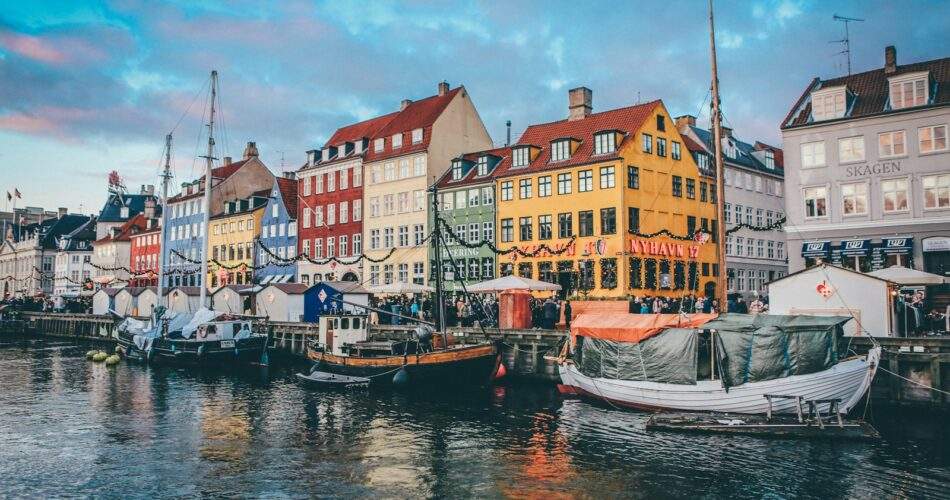
Begin where visitors have begun for centuries: along Nyhavn’s postcard-perfect canal, where candy-colored townhouses lean toward the water and wooden ships bob in the harbor. It’s touristy, yes, but there’s honesty in its beauty—Hans Christian Andersen lived in three different houses here, and the atmosphere he might have known still lingers in early morning before the crowds arrive. From there, cross to Christiansborg Palace, where you can climb the tower for free and see the entire city spread before you: the copper spires, the emerging skyline of Ørestad, the ribbon of water connecting Copenhagen to Sweden.
The design pilgrim’s route runs through the Louisiana Museum of Modern Art—technically in Humlebæk, thirty-five minutes north by train, but essential for understanding Danish aesthetics. Its sculpture garden meets the Øresund strait in a conversation between art and landscape that feels quintessentially Scandinavian. Back in the city center, the Round Tower’s spiral ramp and the marble-clad interiors of Grundtvig’s Church reveal centuries of Danish architectural ambition.
But Copenhagen’s real texture emerges in its neighborhoods. Vesterbro, once the red-light district, now pulses with independent boutiques and third-wave coffee roasters. The Meatpacking District transforms from wholesale to nightlife as evening arrives. Cross to Nørrebro for a grittier, more multicultural energy, where Jægersborggade’s tiny street hosts some of the city’s most innovative shops. And here’s the local secret: rent a bike and pedal to the northern beaches—Bellevue or Charlottenlund—where Copenhageners escape on summer afternoons, bringing blankets and beer to coastlines that feel wonderfully unmanicured compared to the manicured city center.
The New Nordic food revolution started here, and while Noma may have moved and evolved, its influence saturates the city’s eating culture. You’ll find it in the emphasis on seasonality, the obsessive sourcing from nearby farms and waters, the willingness to ferment and preserve and reimagine what Nordic ingredients can become. For everyday eating, seek out smørrebrød—open-faced rye bread sandwiches topped with anything from pickled herring to roast beef with remoulade. The tradition feels democratic and refined simultaneously, elevated lunch food that pairs perfectly with a cold Carlsberg. Restaurant Schønnemann has served them since 1877 with an authenticity that transcends trend.
Don’t miss the city’s pastry culture either. Wienerbrød (what we mistakenly call “Danish” pastries) reaches its apex here, particularly at Hart Bageri, where the cardamom-scented morning buns justify early rising. Summer brings strawberries from Lammefjord served with cream; autumn demands apples prepared a dozen ways.
For accommodation, the choice largely centers around atmosphere. Indre By—the medieval center—puts you within walking distance of everything but can feel tourist-heavy. Vesterbro offers more local flavor, excellent restaurants, and easy access to the central station. Nørrebro suits travelers who want to see Copenhagen’s creative, multicultural side. Islands Brygge appeals to design lovers and those who want to swim in the harbor baths. The neighborhoods are small and the cycling culture means everywhere feels accessible—choose based on evening atmosphere rather than daytime convenience, since you’ll likely cover the entire compact city center anyway.