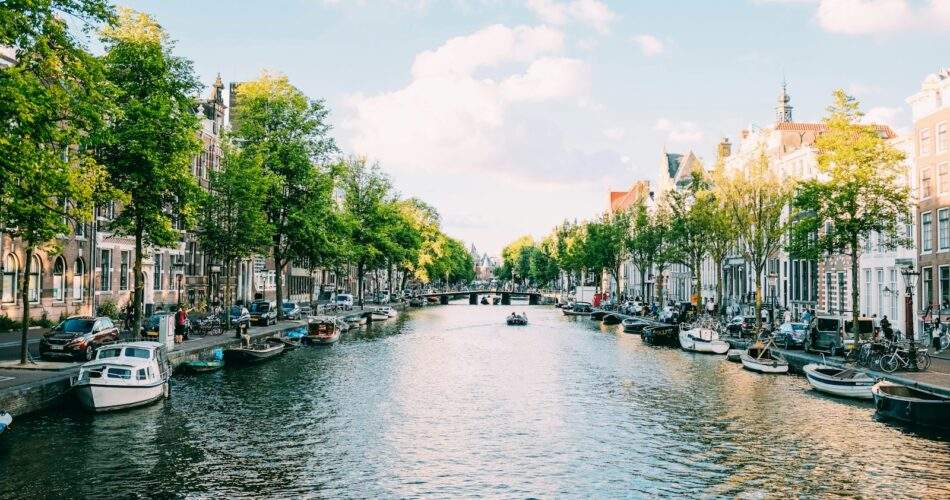

Amsterdam reveals itself slowly, canal by canal. This is a city built on impossible odds—a medieval port constructed on marshland and wooden pilings, where water defines not just the geography but the entire rhythm of life. The light here bounces differently off the waterways, casting rippling reflections onto the narrow gable houses that lean like old friends sharing secrets. Cyclists weave through streets with an intuitive grace that seems choreographed, and the air carries hints of stroopwafels and fresh rain. Amsterdam earns its reputation not through grand monuments or sweeping vistas, but through intimate moments: a quiet courtyard hidden behind an unmarked door, a brown café where locals have gathered for centuries, the particular quality of dusk when the bridges light up and the entire city seems to glow from within.
When to Plan Your Visit
Spring brings Amsterdam’s most celebrated spectacle. April and early May transform the city with blooming tulips, particularly at Keukenhof Gardens, though the parks and canal-side planters throughout the city burst with color as well. Temperatures hover comfortably between 10-17°C, perfect for cycling. The drawback? Everyone knows spring is glorious here, so expect crowds and premium prices, particularly around King’s Day on April 27th when the entire city turns orange for a massive street festival.
Summer sees long daylight hours stretching until 10 PM, ideal for canal-side dining and outdoor concerts. June through August brings the warmest weather but also peak tourist season—museums require advance booking and popular restaurants fill quickly. Early September offers a sweet spot: still warm enough for terrace sitting, but the summer crowds have thinned considerably.
Winter transforms Amsterdam into something more introspective. November through February brings cold, damp weather and early darkness, but also fewer tourists, lower prices, and a distinctly cozy atmosphere the Dutch call gezelligheid. The city’s museums, brown cafés, and concert halls become especially inviting. If canals freeze—rare but magical—locals dust off their ice skates for an experience you’ll never forget.
The Amsterdam Experience
The Rijksmuseum anchors any cultural exploration, housing Rembrandt’s “Night Watch” and an extraordinary collection of Dutch Golden Age paintings. But perhaps more revealing is the smaller Museum Van Loon, a preserved canal house that shows how Amsterdam’s merchant families actually lived. The Anne Frank House remains profoundly moving, though you must book tickets weeks in advance.
Amsterdam’s neighborhoods tell different stories. The Jordaan, once a working-class district, now brims with independent boutiques, art galleries, and intimate restaurants tucked into impossibly narrow buildings. Wander its side streets on a weekday morning and you’ll find local markets like the Noordermarkt, where neighbors shop for organic produce and vintage clothes. The De Pijp neighborhood pulses with a younger, more diverse energy centered around the Albert Cuyp Market, where Surinamese roti stands neighbor Turkish bakeries and traditional Dutch herring carts.
For something most tourists miss entirely: seek out the city’s hofjes—hidden courtyards originally built as almshouses for elderly women. The Begijnhof is well-known, but dozens of others remain gloriously quiet. The Karthuizerhof in the Jordaan or the Sint-Andrieshof near Prinsengracht offer peaceful sanctuaries mere steps from busy streets, accessible through unmarked doors that remain open during daylight hours.
The canal ring itself deserves exploration by bicycle, the city’s unofficial religion. Rent one (with a proper lock—bike theft is endemic) and you’ll understand Amsterdam from a local’s perspective. The rhythm of stopping for bridges, navigating tram tracks, and parking in impossibly crowded bike racks becomes meditation.
Flavors Worth Seeking
Dutch cuisine deserves more respect than it typically receives. Beyond the obvious stroopwafels and cheese (though both are genuinely excellent), seek out bitterballen—crispy fried beef croquettes perfect with beer. Haring—raw herring with onions and pickles—tastes best in June when the new season’s catch arrives. Winter brings erwtensoep, a thick split pea soup substantial enough to be a meal.
Indonesian food represents Amsterdam’s colonial history, now evolved into its own Dutch-Indonesian fusion. The rijsttafel (rice table) offers multiple small dishes showcasing diverse flavors. For authentic atmosphere, the brown cafés scattered throughout the Jordaan and around Leidseplein serve simple Dutch fare in settings unchanged for generations. Café ‘t Smalle on Egelantiersgracht occupies a 1786 distillery building with a perfect canal-side terrace. For Indonesian, Blauw specializes in contemporary takes on traditional dishes.
Don’t leave without trying patat—Dutch-style fries served with mayonnaise or, better yet, with peanut sauce and mayonnaise (patatje oorlog, literally “war fries”).
Finding Your Neighborhood
The Canal Ring offers classic Amsterdam—historic, picturesque, and centrally located, though expect steep stairs in converted canal houses. De Pijp suits travelers seeking neighborhood life with excellent restaurants and the famous Albert Cuyp Market within walking distance. The Jordaan balances charm with accessibility, while Oud-West attracts a creative crowd with great cafés and fewer tourists. Amsterdam-Noord, across the IJ river, offers affordable options with a grittier, more local feel and easy ferry connections to the center. When you’re ready to explore accommodations that match your style, Cityraze can help you discover the perfect base for your Amsterdam adventure.