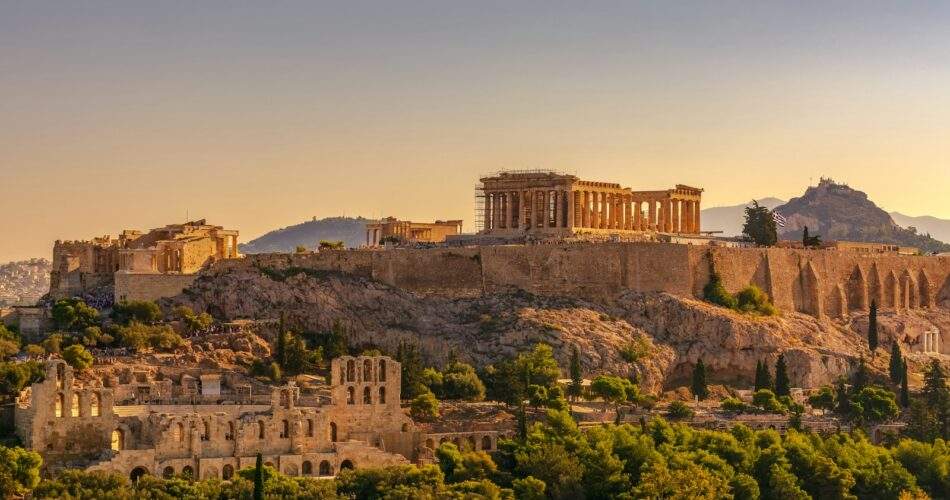

Athens sprawls across sun-bleached hills where the light seems to bend differently, gilding everything in honey tones that painters have chased for centuries. This is a city where philosophy was born in covered walkways, where democracy took its first breath, and where everyday life still unfolds against a backdrop of columns that have stood for millennia. But Athens resists being frozen in amber. Between the ancient stones, you’ll find street art exploding across neoclassical façades, rooftop bars buzzing with energy, and neighborhoods where grandmothers still hang laundry from balconies adorned with jasmine. The city pulses with a defiant vitality—a place that knows its past intimately but refuses to live there.
The question of when to visit Athens depends on what you’re willing to trade. April through June offers the sweet spot: temperatures hover in the comfortable 20s Celsius, wildflowers bloom across the hills, and the fierce summer crowds haven’t yet descended. Late September through October delivers similar conditions with the added bonus of warmer sea temperatures if you’re venturing to nearby beaches.
July and August bring punishing heat—often exceeding 35°C—and the Acropolis becomes a sun-scorched endurance test. Locals flee to the islands, and those who remain adopt a nocturnal rhythm, coming alive after sunset when the city finally exhales. If you visit during these months, embrace the late-night dining culture and plan museum visits for early mornings.
Winter (December through February) surprises many visitors. While mild by northern European standards, Athens can feel raw when rain sweeps in from the Aegean. But prices drop significantly, locals reclaim their city, and you’ll have the ancient sites nearly to yourself—a rare gift. Greek Orthodox Easter, which shifts dates annually, transforms the city with candlelit processions and midnight fireworks.
The Acropolis demands your attention first, naturally, but visit at opening time or late afternoon to avoid both crowds and heat. The marble Parthenon still commands awe, even in its weathered state, while the newer Acropolis Museum below holds treasures displayed with theatrical flair—ancient sculptures positioned so natural light plays across them as it would have in antiquity.
But Athens reveals itself most generously when you descend from the archaeological heights into the living neighborhoods. Plaka’s labyrinthine streets may teem with tourists, but venture into adjacent Anafiotika—a pocket-sized village of whitewashed houses built by islanders in the 19th century—and you’ll feel transported to the Cyclades. The neighborhood clings to the Acropolis slopes, barely wider than a goat path in places.
The central markets in Monastiraki pulse with an energy that connects you to the city’s mercantile DNA. Here, spice sellers hawk saffron and mountain oregano, fishmongers display the morning’s catch on ice, and vendors banter in Greek, Arabic, and broken English. For a glimpse of contemporary Athens, walk Kypseli’s immigrant-rich streets where African grocery stores neighbor old-school Greek coffee houses, or explore Exarchia, the anarchist quarter covered in radical graffiti and home to alternative bookshops and bohemian cafés.
One insider secret: the Hill of the Muses (Filopappou Hill) offers equally stunning Acropolis views without the admission fee or crowds, especially at sunset when Athenians come to walk their dogs and kiss their lovers against a rose-gold sky.
Greek food in Athens transcends the tourist-trap gyros—though a properly made one from Kostas near Syntagma, where locals queue daily, is a revelation. Seek out tavernas in residential neighborhoods like Pangrati where classics are executed with care: tender octopus grilled over charcoal, horiatiki salad (never call it “Greek salad” here) with slabs of creamy feta, moussaka that’s silky rather than stodgy.
The souvlaki distinction matters in Athens—kalamaki refers to meat on a stick, while souvlaki means it’s wrapped in pita. Late-night bakeries sell koulouri (sesame bread rings) warm from the oven, perfect for breakfast with thick Greek coffee. Don’t miss mezze culture—small plates designed for sharing over hours-long meals. Spring brings kokoretsi (organ meat wrapped in intestines, better than it sounds) during Easter celebrations.
Neighborhoods define your Athens experience more than any hotel star rating. Plaka and Monastiraki offer the storybook setting—proximity to ancient sites with pedestrian lanes and rooftop Acropolis views. Kolonaki attracts those seeking sophisticated dining and boutique shopping on tree-lined streets. Psirri delivers gritty authenticity with its tavernas and rembetiko music clubs. Koukaki, just south of the Acropolis, has emerged as a residential favorite with neighborhood cafés and better value than the historic center while remaining walkable to major sites.
Athens rewards those who arrive with curiosity rather than a checklist. Let yourself get lost in its contradictions—ancient and contemporary, chaotic and meditative, crumbling and vital. Through Cityraze, you can explore deeper layers of this complex city, from intimate museum experiences to the tavernas where Athenians actually eat.