
Podgorica sprawls across the meeting point of five rivers, where the Dinaric Alps begin their slow descent toward the Adriatic. This is Montenegro’s capital, yet it resists every polished capital-city cliché. There are no picture-perfect squares overrun with selfie-seekers, no medieval heart preserved in amber for tour groups. Instead, you’ll find a city that wears its complicated history openly—Ottoman bridges standing beside Yugoslav-era concrete blocks, trendy wine bars tucked into renovated warehouses, and locals who greet visitors with genuine curiosity rather than practiced smiles. Podgorica offers something increasingly rare in European travel: authenticity without performance. It’s a place where you experience Montenegro as Montenegrins do, where café culture thrives without Instagram staging, and where the surrounding mountains feel like part of daily life rather than a distant attraction. For travelers weary of over-touristed destinations, Podgorica delivers the refreshing discomfort of the real.
When to Plan Your Visit
Podgorica bakes under a Mediterranean-continental climate, which means planning around weather is essential. Late spring—April through early June—brings the city’s most pleasant conditions. Temperatures hover in the comfortable 20-25°C range, the Morača River runs full from mountain snowmelt, and the surrounding landscapes explode in green. This is wine country, and spring visits coincide with vineyard awakenings across the nearby Plantaže wine region.
Summer (July-August) pushes temperatures well above 30°C, sometimes reaching 40°C. The city empties as locals flee to the coast, leaving behind heat-shimmered streets and a distinctly local rhythm. If you can handle the warmth, you’ll have museums and restaurants largely to yourself—though avoid mid-August entirely when much of the hospitality sector closes for holiday.
Autumn, particularly September and October, rivals spring for ideal visiting conditions. The heat breaks, wine harvest season brings festivals to surrounding villages, and the city’s café culture peaks as everyone returns from summer escapes. Winter (December-February) brings occasional snow and temperatures near freezing, but also rock-bottom prices and a cozy café scene. Just know that some attractions reduce hours significantly, and the city takes on a decidedly grey character when the mountains vanish behind winter clouds.
Exploring Podgorica’s Layers
Start in Stara Varoš, the Ottoman-era quarter that survived World War II bombing largely intact. Here, the Starodoganjska Mosque rises beside narrow lanes where laundry still hangs from wooden balconies, and the Clock Tower stands as a stubborn reminder of five centuries of Turkish influence. This neighborhood breathes with daily life—elderly men playing cards outside traditional kafanas, the call to prayer echoing across tile roofs. It’s small enough to explore in an hour but rewards slow wandering.
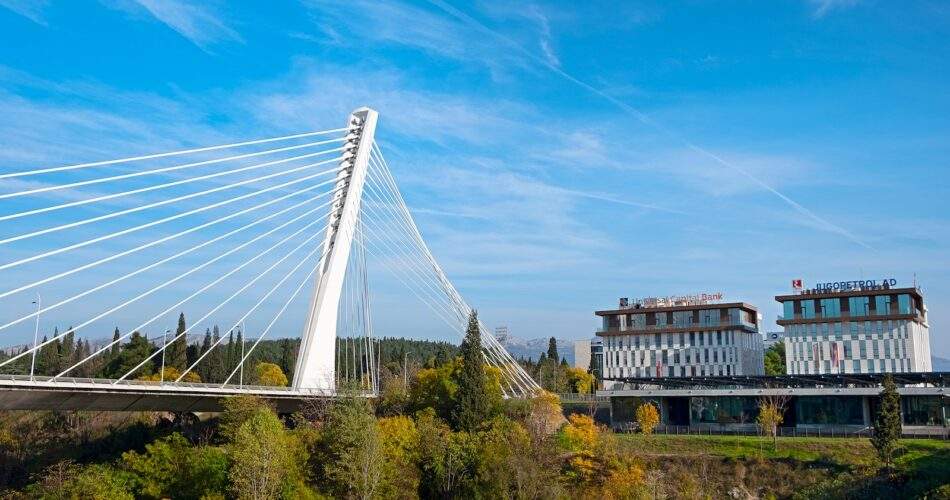
The Millennium Bridge, Podgorica’s most photographed modern landmark, arcs dramatically across the Morača River and perfectly captures the city’s split personality—contemporary ambition tethered to ancient geography. Cross it at sunset when locals gather along the riverbanks for evening strolls. From here, follow the riverside path downstream to the stone ruins of Ribnica Fortress, often completely deserted despite being fifteen centuries old. Most guidebooks miss this entirely.
The Montenegrin National Theatre and nearby Gallery of Modern Art showcase the country’s cultural aspirations, while the brutalist Cathedral of the Resurrection of Christ—massive, controversial, and still under construction—dominates the skyline with gold-plated domes that seem designed to announce Montenegro’s Orthodox identity to the surrounding neighborhoods. For a local secret, visit King Nikola’s Palace on Tuesday evenings when it occasionally hosts classical concerts in its garden—ask at the Cityraze platform when planning, as these aren’t widely advertised.
Tasting Montenegro
Montenegrin cuisine draws heavily from Balkan traditions with coastal Mediterranean influences. In Podgorica, that means hearty grilled meats, particularly ćevapi (skinless sausages) and pljeskavica (seasoned meat patties), best enjoyed with kajmak—a rich dairy spread that falls somewhere between clotted cream and soft cheese. Don’t miss cicvara, a northern Montenegrin staple of cheese, cornmeal, and potatoes that local grandmothers have perfected over generations.
The city’s wine culture deserves attention. Montenegro’s Vranac grape produces bold reds that pair beautifully with local charcuterie, and Podgorica sits near the country’s primary wine region. Pod Volat, a traditional konoba (tavern), serves exceptional local wines alongside house-cured prosciutto. For morning rituals, seek out burek—flaky pastry stuffed with meat, cheese, or spinach—at any local pekara (bakery), ideally paired with thick Balkan coffee drunk slowly while watching the city wake up.
Finding Your Base
The city center around Slobode and Hercegovačka streets puts you within walking distance of most attractions, restaurants, and the main shopping zones. This area suits first-time visitors seeking convenience. For a quieter, more residential feel with local character, consider the neighborhoods near Stara Varoš, where you’ll experience everyday Podgorica life. The areas around City Kvart shopping center offer modern apartments and easy access to both the business district and riverside parks—ideal if you’re using Podgorica as a base for day trips to Skadar Lake or the monasteries. Most accommodation clusters within these zones, and nowhere feels particularly “touristy” since Podgorica hasn’t yet developed distinct visitor districts.
Ready to experience Montenegro’s unvarnished capital? Cityraze can help you discover the restaurants, cultural venues, and authentic experiences that make Podgorica worth your time—no tourist traps, just real travel.