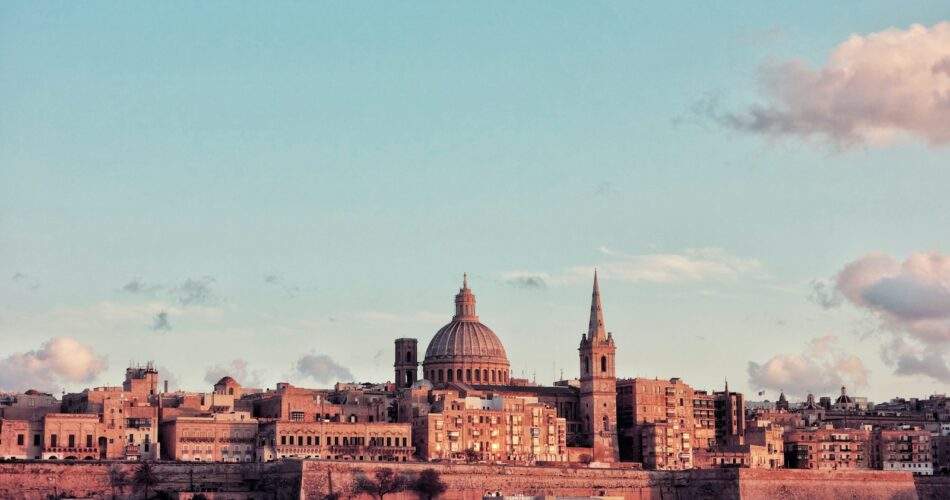

Valletta rises from the Mediterranean like a golden fortress, its honey-colored limestone glowing in the persistent sun. Built by the Knights of St. John in the 16th century, this tiny capital—Europe’s smallest—manages to feel both monumentally grand and intimately human. Walk its grid of steep streets and you’ll find laundry strung between baroque balconies, neighborhood grocers tucked beside ornate palaces, and locals stopping mid-stride to debate politics in Maltese-accented English. The city wears its UNESCO status lightly, more concerned with daily life than preserving itself in amber. Here, history isn’t something behind glass—it’s the cobblestones beneath your feet, the fortifications framing every view, the cafés occupying ground floors of buildings that have stood for four centuries.
The Mediterranean climate makes Valletta accessible year-round, but timing matters. Spring, from March through May, brings wildflowers to the Upper Barrakka Gardens and comfortable temperatures for exploring the city’s relentless hills. Summer (June to September) blazes hot, with temperatures often exceeding 30°C, but the Malta Jazz Festival in July and late-night dining culture make it worthwhile for those who embrace the heat. The sea remains warm enough for swimming well into October.
Autumn stands out as particularly rewarding—September through November offers lingering warmth without summer’s intensity or crowds. Winter, while mild by northern European standards, can be surprisingly wet and windy from December through February. Carnival in February, however, transforms the city into a riot of color and brings genuine local celebration worth braving the unpredictable weather. Easter Week showcases solemn processions and traditional celebrations. Avoid mid-summer if crowds bother you; cruise ships disgorge thousands of day-trippers between June and August, though they largely disappear after 4 PM, returning the city to those staying overnight.
St. John’s Co-Cathedral demands your attention first—not for religious obligation, but because its interior represents baroque artistry at its most unrestrained. The floor alone consists of 400 marble tombstones marking Knights’ graves, while Caravaggio’s “Beheading of Saint John” commands its own chapel. From there, let Valletta’s compact geometry guide you: Republic Street forms the spine, but the parallel side streets reveal the real character. The Upper Barrakka Gardens offer the best vantage point over the Grand Harbour, where fortifications cascade down to impossibly blue water.
The National Museum of Archaeology houses Malta’s prehistoric artifacts, including treasures from the world’s oldest free-standing structures at Ħaġar Qim. But save time for simply wandering—down Merchants Street where locals actually shop, through Strait Street (once notorious for its bars catering to sailors, now gentrifying with wine bars and restaurants), and into the quieter neighborhoods near the Manoel Theatre, one of Europe’s oldest working theaters.
For an unexpected perspective, descend into the Lascaris War Rooms, the underground headquarters where Allied operations in the Mediterranean were coordinated during World War II. Even fewer visitors discover the small churches scattered throughout residential areas, often open only for morning Mass but architecturally significant. The Church of St. Paul’s Shipwreck holds relics in solid silver and tells Malta’s Christian foundation story without the crowds at St. John’s.
Maltese cuisine blends Sicilian, North African, and British influences into something distinctly its own. Pastizzi—flaky pastry pockets filled with ricotta or mushy peas—are the national snack, best eaten fresh and warm from hole-in-the-wall bakeries. Crystal Palace on Republic Street has served them since the 1960s to everyone from construction workers to politicians. For something more substantial, seek out fenek (rabbit stew), braised slowly until tender, traditionally served on Sundays. Ftira, a Maltese flatbread topped with tomatoes, capers, and tuna or anchovies, makes excellent beach food.
Summer brings lampuki (mahi-mahi) pie, while winter means soppa tal-armla, a hearty vegetable soup with local cheese. Don’t leave without trying ġbejna, small rounds of sheep or goat cheese served fresh, peppered, or dried. The wine scene has improved dramatically—Maltese wineries now produce respectable whites and reds from indigenous and international grapes. Nenu the Artisan Baker combines traditional recipes with warm hospitality in a setting locals actually frequent.
Valletta itself offers limited accommodation, mostly boutique hotels and guesthouses within converted townhouses and palaces. Staying within the fortifications means living within walking distance of everything, with the trade-off being steep streets and less space. The Sliema and St. Julian’s areas, across the harbor, provide more hotel options and waterfront promenades, connected to Valletta by a quick ferry ride. For authentic neighborhood atmosphere, consider Floriana, just outside Valletta’s gates—residential, affordable, and a five-minute walk to the city proper.
Whether you spend two days or a week, Valletta rewards those who look beyond its fortifications to discover a working capital that happens to be extraordinarily beautiful. Start planning your visit through Cityraze to find the cultural experiences, restaurants, and accommodations that match your travel style—because this golden city deserves more than a cruise ship stopover.